

Choosing the right belt loader isn’t a one-size-fits-all decision. The correct model depends on your aircraft type, operating environment, and the type of cargo you’re handling. At Aviation Spares, the belt loader range is designed to cover everything from smaller regional aircraft through to larger commercial planes, with variations in boom type, power source, and service range.
Start with Aircraft Size and Service Range
The most important factor is the service height range of the belt loader. This determines whether the loader can safely and efficiently reach the aircraft cargo hold.
For example:
- Models like the Pulley69 range offer a service range of 05m to 5.20m, making them suitable for a wide mix of aircraft sizes
- Larger models such as the Pulley90 range also reach up to 20m, but with a longer overall length (up to 9.10m), making them better suited for larger aircraft and higher-volume operations
- More compact options like the Pulley 46Ce are designed to service aircraft ranging such as the BAe 146, Boeing 737 and ATR 720 offering flexibility across different fleets
Telescopic vs Fixed Boom: What’s the Difference?
Another key decision is whether you need a telescopic or fixed boom belt loader.
| Feature | Telescopic Boom (e.g. Pulley69, Pulley 46Ce) | Fixed Boom (e.g. Pulley75, Pulley90) |
| Flexibility | Adjustable reach for different aircraft heights | Fixed reach for consistent operations |
| Use Case | Mixed fleets, varying aircraft sizes | Dedicated routes or consistent aircraft types |
| Manoeuvrability | High, with smaller turning circle | Strong stability for repeated tasks |
| Positioning | Easier alignment with aircraft doors | More rigid but reliable setup |
If you regularly service different aircraft types, a telescopic model such as the Pulley69Sd offers greater versatility. For consistent, high-volume work with the same aircraft types, a fixed boom may be the better option.
Electric vs Diesel: Choosing the Right Power Source
Power source is another important consideration, particularly depending on your operating environment.
| Feature | Electric Models (Ce / Se) | Diesel Models (Cd / Sd) |
| Emissions | Zero emissions at point of use | Suitable for outdoor use |
| Noise | Low-noise operation | Higher noise output |
| Downtime | Quick battery replacement systems | Continuous operation with fuel |
| Best For | Indoor or noise-sensitive environments | Heavy-duty, high-demand operations |
Electric belt loaders are ideal for airports focused on reducing environmental impact or operating in enclosed spaces. Diesel models, on the other hand, provide consistent performance for demanding, high-volume workloads.
Load Capacity and Belt Specifications
Across the range, belt loaders are built to handle:
- Maximum single load: 450 kg
- Continuous load: 135 kg/m
- Belt width: 600 mm (within an 850 mm boom)
This ensures reliable handling of air freight, bulk cargo, and luggage across all models.
Other Factors to Consider
Beyond size and power, there are additional features that can influence your decision:
- Operator setup: Some models include foldable seats for seated or standing operation
- Customisation: Modular designs allow for features like roll tables, safety sensors, and branding options
- Manoeuvrability: Telescopic models offer smaller turning circles for tighter spaces
- Stability: Fixed boom models provide strong structural reliability for repetitive tasks
To Summarise
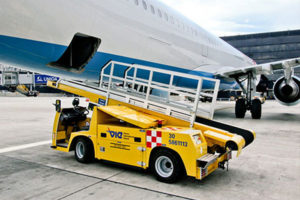
The right belt loader depends on how and where you operate. If you handle a mixed fleet, a telescopic model like the Pulley 46Ce offers flexibility. If you’re focused on larger aircraft or high-throughput operations, the Pulley90 range is a good example which provides the reach and stability required.
If you’re unsure, it’s always best to assess your aircraft range, operating conditions, and workload before selecting the most suitable model.