
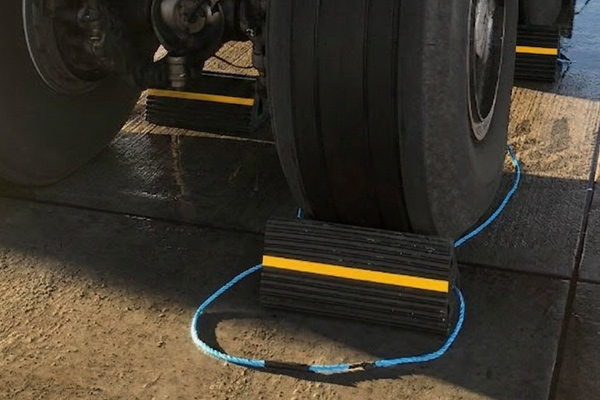
Are Small Wheel Chocks Suitable for Business Jets?
Selecting the correct aircraft wheel chock size is critical for safe ground handling, particularly for business jets operating in busy FBO environments.
Business jets can vary significantly in weight – from around 4,000 kg for very light jets up to 50,000 kg+ for larger aircraft – and this variation has a direct impact on the size and type of wheel chock required. While small wheel chocks are commonly used across general aviation, their suitability for business jets depends on aircraft size, weight, and operating conditions.
Are Small Chocks Enough for Business Jets?
The most critical factor with determining the suitability of a chock are its height and width, as they determine whether the aircraft can be held in place reliably. The height must match the tyre size to properly secure the wheel and prevent the wheel from rolling over the chock, while the width provides stability, needed to resist movement from the weight of the aircraft and any variations in conditions. If a chock is undersized, it can slip or fail under load; if oversized, it may not sit correctly against the tyre or be practical for ground crews to deploy. Getting the dimensions right is crucial for safe, efficient ramp operations.
|
Aircraft Type |
Typical Chock Height |
Width Preference |
Why |
|
Light GA / Business jets |
150 mm |
Small tyres, low aircraft mass, minimal rolling force |
|
|
Turboprops / Regional jets |
80-125 mm |
150–300 mm |
Slightly larger tyres but still relatively low loads |
|
Narrow-body (e.g. Airbus A320 / Boeing 737) |
250–300 mm |
Standard commercial ops; balance of stability and manual handling |
|
|
Wide-body (e.g. Airbus A330 / Boeing 787) |
160–195 mm |
250–300 mm |
Larger tyres and higher mass so increased stability required |
|
Heavy wide-body (e.g. Boeing 777 / Airbus A350) |
300–350 mm |
Very high aircraft weight so large contact area and strong resistance to movement |
|
|
Very large aircraft (e.g. Airbus A380) |
350+ mm (often paired chocks) |
Extreme weight and multiple wheel sets so maximum stability and redundancy |
Wheel Chocks in FBO Operations
In real-world FBO environments, wheel chock selection is rarely one-size-fits-all. Most operators handle a wide range of aircraft throughout the day, from light jets to heavy long-range business jets.
As a result, FBOs typically stock multiple chock sizes and materials, ensuring ground crews can match the correct chock to each aircraft. Medium to large rubber chocks are commonly used as the default for business jet parking, with smaller chocks reserved for lighter aircraft and larger, reinforced options used during refuelling, high winds, or sloped ramp conditions.
This operational flexibility is key to maintaining safety across varied aircraft movements.
FAA and Ramp Safety Considerations
When looking at FAA requirements for business jet wheel chocking on sloped or windy ramps, the emphasis is always on preventing unintended aircraft movement. This means:
- Using appropriately sized chocks for the aircraft
- Chocking both forward and aft of the wheel when required
- Increasing chock size or quantity in adverse weather or on inclines
Undersized chocks may not provide enough resistance, especially during loading, refuelling, or high wind conditions.
Risks of Using Undersized Chocks
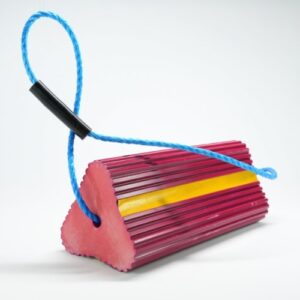
There is a real risk of using light aircraft wheel chocks on business jets, particularly around stability and FOD (Foreign Object Debris). Smaller chocks can:
- Shift or slip under load
- Fail to fully engage the tyre surface
- Become dislodged and create hazards on the ramp
This makes correct sizing not just a performance issue, but a safety requirement.
Typical FBO Setup
If you’re wondering what size of wheel chocks are typically supplied for business jets at an FBO, most operators maintain a range of sizes rather than relying on a single standard. This ensures aircraft of varying weights can be safely secured, with larger and heavier chocks used as aircraft size increases or conditions demand.
Final Thoughts
Small wheel chocks can be suitable for certain business jets, particularly lighter models at the lower end of the weight range, operating in controlled conditions. However, for mid-size jets and above, larger and heavier chocks are the safer and more reliable choice.
For FBOs, operators, and maintenance teams, matching chock size to aircraft specifications ensures better safety, compliance, and day-to-day operational confidence on the ramp.