

Airports are modernising ground support equipment to improve efficiency, sustainability, and safety
Ground support equipment (GSE) is evolving rapidly as airports respond to growing passenger demand, environmental targets, and operational pressures. In 2025, the CAA reports that the UK broke a passenger record, hitting over 302 million passengers. With this ever increasing volume of traffic, airports need every advantage in getting aircraft processed and turned around as quickly as possible and there are a number of innovations within GSE that are making this possible.
In 2026, investment is increasingly focused on smarter, cleaner, and more efficient equipment that can improve turnaround times while reducing operational costs and emissions. More airports across the world increasing to fully eletricify their ground support vehicles, to name just one measure.
From electric baggage tractors to connected fleet management systems, airports are reshaping ramp operations around technology and sustainability.
Electric Ground Support Equipment Continues to Expand
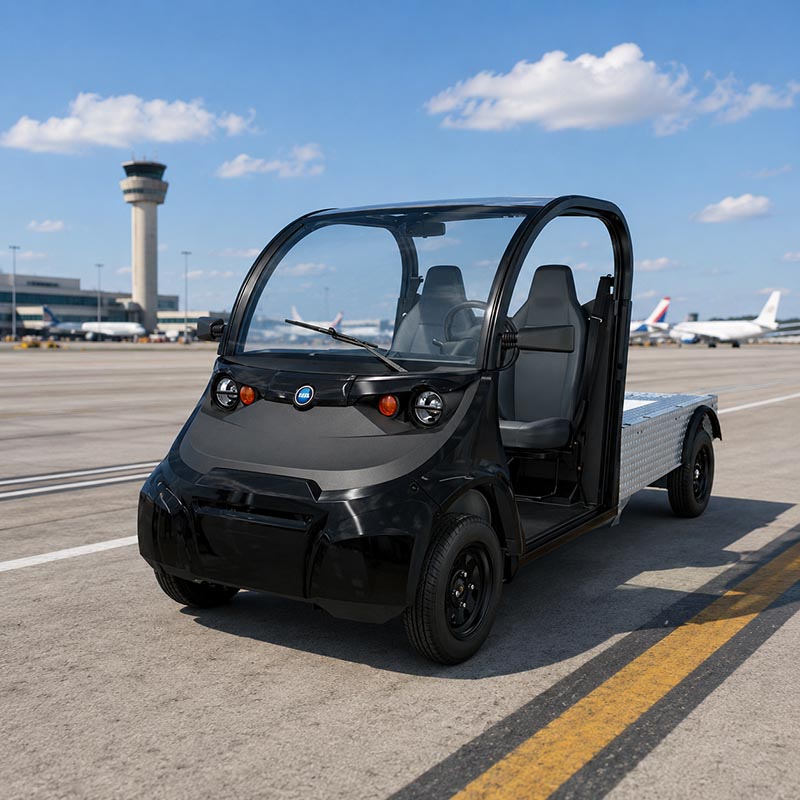
One of the biggest trends in 2026 is the continued move toward electric GSE. Airports are investing in:
- Electric baggage tractors
- Electric pushback tugs
- Electric passenger stairs
This shift is being driven by sustainability targets and an ongoing effort to reduce carbon emissions across airport operations wherever they can, and the Department for Transport is continuing to support wider transport decarbonisation initiatives, while many UK airports are introducing their own environmental targets.
Smart Fleet Monitoring and Telematics
Connected GSE technology is becoming increasingly common across airport fleets. Telematics systems allow operators to:
- Monitor vehicle location
- Track battery or fuel usage
- Identify maintenance requirements
- Monitor equipment utilisation
- Improve operational planning
This is managed by software platforms utilising local 5G connectivity and, in some cases, AI systems to make everything connected and fully utilised.
Airports Are Investing More in Ramp Safety Technology
Ramp congestion remains a major operational challenge at busy airports. To improve safety, many airports are investing in:
- Collision avoidance systems
- 360-degree camera systems
- LED safety lighting
- Pedestrian detection technology
- Speed-limiting systems
Automation Is Becoming More Common
Automation is gradually expanding within airport operations. Examples include:
- Semi-autonomous baggage tractors
- Automated docking guidance systems
- Smart gate allocation software
- Autonomous cleaning vehicles
- Digital apron management systems
While fully autonomous airport operations remain some way off and may not be desirable due to safety concerns, automation is already helping improve consistency and reduce labour pressures. Example such as the Auto DollyTug show that the technology is making massive strides.
Sustainability Is Influencing Equipment Purchasing Decisions
Environmental performance is now a major consideration when airports purchase new equipment. Many operators are prioritising:
- Electric-powered vehicles
- Energy-efficient systems
- Lower-noise equipment
- Longer-life components
- Reduced maintenance requirements
Sustainability is increasingly shaping long-term airport investment strategies across the UK aviation sector.

Demand for Refurbished and Remanufactured Equipment Is Growing
Not all airports are investing exclusively in brand-new equipment. Many operators are also purchasing:
- Refurbished belt loaders
- Reconditioned pushback tugs
- Remanufactured service vehicles
- Refitted ground power units
For smaller airports and handling companies, refurbished equipment can provide a cost-effective route to fleet modernisation.
Digital Maintenance Management Is Expanding
Maintenance software is becoming increasingly important for airport operators. Digital systems help teams:
- Schedule servicing
- Monitor equipment faults
- Track spare parts inventory
- Improve compliance documentation
- Reduce unexpected equipment failures
Improved maintenance planning helps maximise equipment availability during busy periods.