
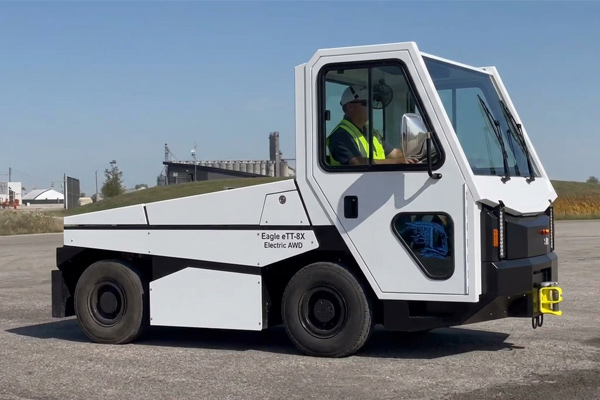
Electric ground support equipment (eGSE) is rapidly growing, but it is unlikely to fully overtake diesel in 2026. However, adoption is accelerating due to sustainability targets, cost efficiencies, and airport investment in charging infrastructure – making 2026 a potential tipping point rather than a complete transition.
What is electric ground support equipment (eGSE)?
Electric ground support equipment refers to vehicles and machinery that are either battery or mains-powered and used in airport operations, including belt loaders, tow tractors and other airside equipment, designed to reduce emissions and improve efficiency.
At Aviation Spares, electric belt loaders such in the CE and SE ranges, such as the PULLEY69ce and PULLEY75ce use battery systems that can be quickly replaced, allowing continuous operation while delivering low-noise, zero-emission performance at the point of use.
Is electric GSE replacing diesel in 2026?
Electric GSE is not fully replacing diesel in 2026, but it is expected to reach or exceed 50% adoption globally, marking a major shift in ground handling operations.
In practice, this means airports are increasingly adopting electric fleets, but diesel equipment still plays a critical role – particularly in demanding, high-throughput environments where uninterrupted operation is essential. Also, as batteries perform worse at higher temperatures, operation with regular high temperatures (40°C) will degrade battery life. Lastly, in any nation where fuel is cheap relative to Europe, the cost of running diesel equipment will likely be cheaper than electric alternatives — though this naturally means the inverse is true, in nations with a higher cost of fuel, electric equipment will be cheaper.
Why are airports switching to electric equipment?
Airports are switching to electric GSE to reduce carbon emissions, lower operating costs, meet regulatory requirements, and improve airside working conditions.
Key drivers include:
- Net zero aviation targets
- Reduced fuel and maintenance costs
- Lower noise levels in operational areas
- Investment in charging infrastructure
Electric tow tractors, for example, offer quieter operation and eliminate on-site emissions, making them well-suited to indoor or noise-sensitive environments.
What are the benefits of electric belt loaders?
Electric belt loaders offer lower fuel costs, reduced maintenance, quieter operation, and zero on-site emissions compared to diesel alternatives.
Within the Aviation Spares range:
- Electric models feature quick battery replacement systems, reducing downtime
- They maintain strong performance for luggage, bulk cargo, and air freight
- They are ideal for modern airports prioritising sustainability
What are the limitations of electric ground support equipment?
The main limitations include battery range, charging infrastructure requirements, and higher upfront costs compared to diesel equipment.
While battery swapping helps minimise downtime, electric models still rely on operational planning and infrastructure availability. This is where diesel equipment continues to provide an advantage.
Which airports are leading the transition?
Frankfurt Airport in Germany, Denver Airport in the USA and Vienna Airport in Austria are but a few examples of airports across North America and Europe leading the movement away from diesel operated equipment. Vienna Airport has even been Carbon neutral since 2023, thanks in no small part to this move.
These airports increasingly treat electric GSE as the default, particularly for new developments and upgrades, signalling a commitment to a long-term shift.
Electric vs diesel belt loaders: which is better?
Electric belt loaders are better for sustainability and long-term cost savings, while diesel models still offer advantages in heavy-duty, continuous operations.
| Feature | Electric Belt Loaders (CE / SE) | Diesel Belt Loaders (CD / SD) |
| Emissions | Zero at point of use | Higher emissions |
| Noise | Low noise | Higher noise |
| Operation | Battery-based (swap system) | Continuous fuel operation |
| Best Use | Passenger-facing stands and high-traffic apron areas due to no emissions and low sound | Heavy-duty, high duration tasks |
Diesel-powered loaders remain a strong choice for consistent, high-volume work where downtime must be minimised.
What does the future of ground support equipment look like?
The future of GSE is electric, connected, and increasingly efficient, with airports investing in low-emission fleets to improve turnaround times and operational performance.
Rather than a sudden switch, the transition is happening gradually – blending electric and diesel equipment based on operational needs.
Choosing the Right Belt Loader for Your Operation
Selecting the right belt loader depends on your aircraft range, workload, and operating environment.
- Electric models (CE / SE)
Best for sustainability-focused operations, indoor use, and reduced noise environments
- Diesel models (CD / SD)
Best for heavy-duty, continuous use and high-demand ground handling
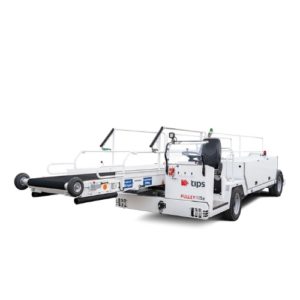
Across the Aviation Spares range:
| Model Range | Typical Use Case |
| Pulley 69 | Flexible use across mixed aircraft fleets |
| Pulley 75 | Mid-range operations with consistent demand |
| Pulley 90 | Larger aircraft and high-volume environments |
Each model is designed to handle air freight, bulk cargo, and luggage, with options for telescopic or fixed booms depending on your operational requirements.
Final Thought
2026 won’t be the year diesel disappears – but it may be remembered as the point where electric ground support equipment becomes the standard direction of travel.
For operators, the real question isn’t if to switch – but when and where electric makes the most sense within their fleet.