

Aircraft marshalling is one of the most important parts of safe airport ground operations. Proper marshalling equipment helps pilots position aircraft safely while reducing the risk of collisions, equipment damage, and ground crew injuries.
As airports become busier and aircraft movements increase, modern marshalling systems are evolving to improve visibility, accuracy, and operational safety.
The UK Civil Aviation Authority continues to emphasise the importance of safe airside operations and effective risk management across airport environments.
What Is Marshalling Equipment?
Marshalling equipment includes the tools and systems used to guide aircraft safely during taxiing, parking, and stand positioning. Examples include:
- Illuminated marshalling wands
- Reflective safety equipment
- Docking guidance systems
- Apron lighting systems
- Aircraft stand guidance technology
These systems help maintain clear communication between ground crews and pilots.

Why Ground Safety Matters at Airports
Airport aprons are highly active operational areas involving:
- Aircraft movements
- Service vehicles
- Ground crews
- Fuelling operations
- Passenger boarding equipment
Without effective guidance and communication, risks can include:
- Aircraft collisions
- Ground crew injuries
- Equipment strikes
- Aircraft positioning errors
- Delayed turnaround times
Effective marshalling procedures help reduce these risks and improve operational coordination.
Marshalling Wands And Bats
Airport Marshalling is one of the most important roles to safe operation of airports and movement of aircraft. Marshalling bats are typically used in daytime use, as these are coated in Dayglo and broad and round, which improves visibility within daylight and requires no power. These bats can be used for on ramp operations as well as elsewhere such as within car parks, with emergency services, etc. During daytime on ramp applications, Dayglo marshalling wands are commonly used, as these allow clearer signalling than their bat counterparts.
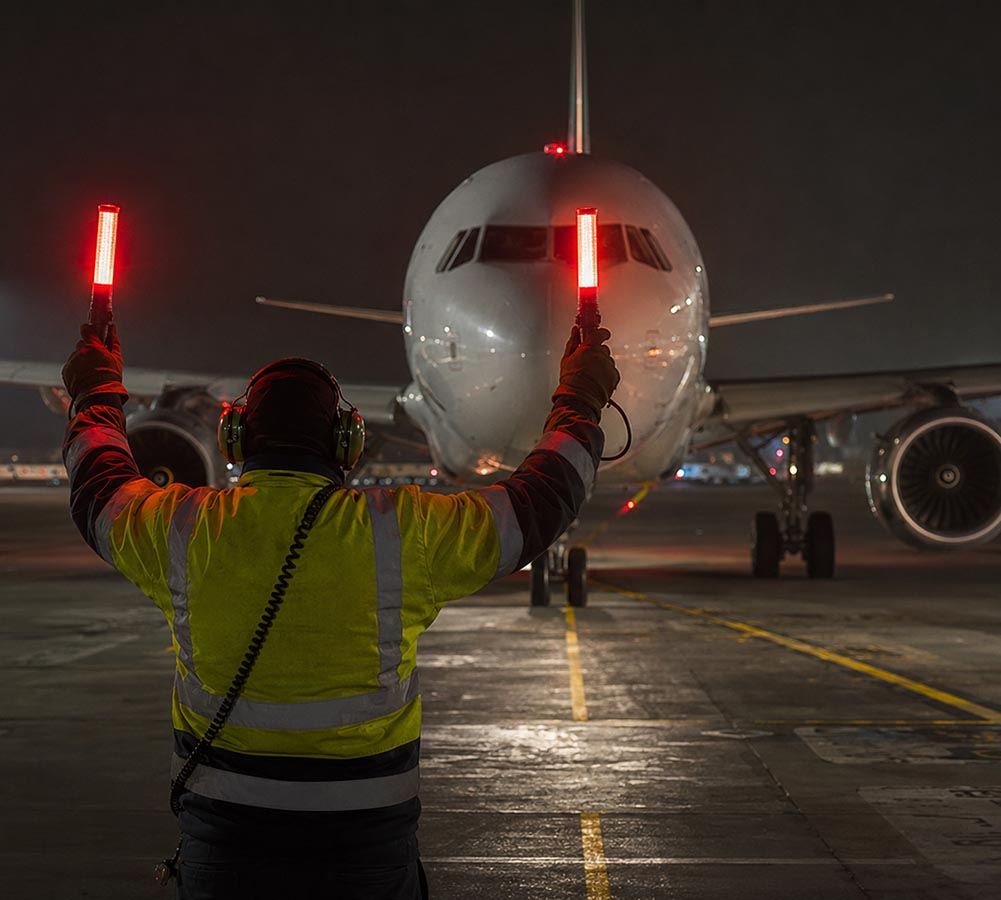
During nighttime operations, throughout the airport but especially on ramp, illuminated marshalling wands are the go-to, they come in a variety of colours enabling different types of signalling at night Modern marshalling wands are becoming increasingly common across airports. Compared to bulb powered wands, LED equipment offers:
- Better visibility in poor weather
- Improved night-time operation
- Longer battery life
- Lower maintenance requirements as LEDs fail less than conventional bulbs
- Clearer and safer communication with pilots
This helps improve safety during challenging operational conditions and enables the wands to be used longer between charging, optimising their usage and reducing the total amount of wands needed in use at any given time. Furthermore, rechargeable batteries are becoming more commonplace within illuminated marshalling wands, further improving operational efficiency.
Automated Docking Guidance Systems Are Expanding
Many airports are investing in advanced visual docking guidance systems (A-VDGS). These systems use sensors and digital displays to guide aircraft accurately into parking positions. Benefits include:
- Improved parking precision
- Faster aircraft positioning
- Reduced reliance on manual guidance
- Lower risk of stand collisions
- Improved operational consistency
Automated systems are becoming increasingly important at busy airports with high aircraft movement volumes.
Better Visibility Is Improves Ramp Safety
Visibility remains one of the biggest safety challenges on airport aprons. Airports are increasingly investing in:
- Enhanced apron floodlighting
- Reflective vehicle markings
- Smart warning lights on equipment
- Improved stand lighting systems
Better visibility helps reduce accidents during poor weather and night-time operations.
Digital Safety Monitoring Is Growing
Some airports are introducing digital systems that monitor ramp activity in real time. These systems may include:
- Camera-based safety monitoring
- Vehicle tracking technology
- Digital incident reporting systems
- AI-assisted operational analysis
- Real-time equipment monitoring
These technologies help operators identify risks earlier and improve oversight.
Training and Standardisation Remain Essential
Even with improved technology, effective training remains critical. Modern marshalling operations still rely heavily on:
- Standardised signalling procedures
- Clear communication protocols
- Regular equipment maintenance
- Ongoing staff training
- Strong operational discipline
Technology supports safety, but experienced and properly trained personnel remain central to safe ground handling.
Closing Thoughts
Aircraft marshalling equipment is vital for enabling safe manoeuvring of aircraft and ground support equipment, helping pilots position aircraft accurately and reducing the risk of collisions, injuries, and operational delays.
Modern airports are increasingly adopting modern innovations such as LED marshalling wands, advanced docking guidance systems, improved apron lighting, and digital monitoring software to enhance visibility, communication, and operational optimisation. While automation and real-time safety systems are improving ramp efficiency and reducing risks, effective training, standardised procedures, and experienced ground crews remain critical to safe airside operations.