Request a Quote


    • 500 characters remaining

    • I allow Aviation Spares & Repairs to contact me via email/phone to discuss this enquiry. If you would like to know more about the way we handle your data, please view our Privacy Policy

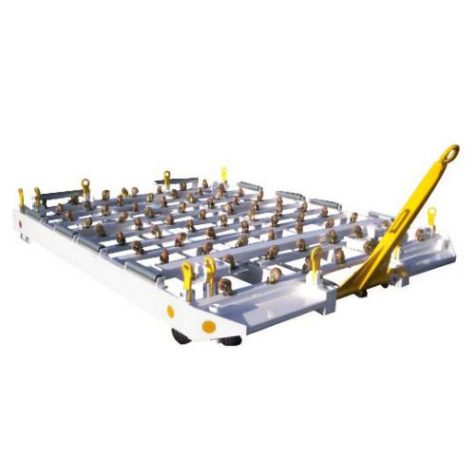
    Open Baggage Cart

    £0.00 (Ex VAT) £0.00 (Inc VAT)

    Product Description

    Our open baggage cart is ideal for use on the ramp. The durable and heavy duty design of the cart allows it to carry up to 8000 lbs (3628.74 kgs) of luggage.

    • Heavy duty rigid mount
    • Removable end panels
    • 8,000 lbs (3628.74 kg) capacity
    • E-type rear hitch
    • Towbar actuated parking brake
    • V-Floor
    • Solid tires
    • 5th wheel spindle with heavy duty timken bearings
    • Durable powder coat finish

    P/N: 500450

    Please contact Aviation Spares & Repairs Limited for more information on the open baggage cart. We are here to help with all your GSE requirements.
    Dimensions:

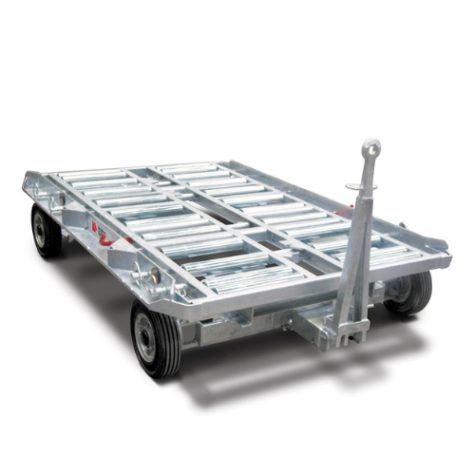
    • Dimensions: L 144″ x W 65″ x H 25″ (365.8 cm x 165.1 cm x 63.5 cm)
    • Weight: 1025 lbs (465 kg)

    What is the typical load capacity and internal volume in terms of bags or kilograms?

    The typical load capacity is 8,000 lb (3,628 kg). In terms of physical size, the unit measures 365.8 inches long, 165.1 inches wide, with a maximum internal height of 63.5 inches, giving it a high-volume load area.

    When it comes to the number of bags, there isn’t a fixed figure. This depends on how the luggage is loaded and the operator’s own handling procedures. The weight capacity is the key limiting factor, rather than the size or number of individual suitcases. For example, large cases with light contents may reduce the total number carried, whereas smaller or heavier bags will reach the weight limit sooner.

    Overall, an 8,000 lb payload offers substantial capacity in operational terms, but loading should always be managed based on total weight rather than bag count.

    Is the cart compatible with common tugs and tow bars, and what is the recommended towing speed?

    Yes, the cart is compatible with standard e-hitch connections, which are commonly found on airport tugs and tow bars. This allows it to be easily towed using typical ground support equipment.

    The cart is fitted with fifth-wheel steering, which helps with stability and supports the braking mechanism during towing and manoeuvring.

    In terms of speed, towing limits are set by operator procedures, but the recommended maximum towing speed is up to 9 miles per hour. It should not be towed any faster than this, and operators should always adjust speed based on conditions. This towing speed is specific to the cart and is different from the lower speeds used when towing an aircraft.

    What safety features are included to prevent load shift and FOD?

    Safety features to prevent load shift and reduce FOD depend partly on operator procedures, but the cart itself is designed with several built-in controls. The cart has end panels that prevent baggage from moving off the front or rear during transit, and loads are typically secured with straps to keep them stable while towing.

    Additional containment is provided through removable and/or high end panels, which help keep baggage and cargo within the load area. The cart also features a towbar-activated parking brake that automatically engages when the cart is uncoupled, preventing unintended movement.

    Fifth-wheel steering improves overall stability and manoeuvrability, reducing side loads and the risk of shifting when turning. The durable construction and use of solid or pneumatic tyres help minimise bounce during operation, which in turn reduces the likelihood of foreign object debris (FOD) being generated on the ramp.

    What loading or weight distribution guidelines should operators follow?

    Loading and weight distribution should follow each operator’s internal procedures, but the key principle is to distribute baggage evenly across the cart floor. Keeping the load balanced helps maintain stability during acceleration, braking, and when turning, and reduces the risk of bags shifting or falling from the cart.

    Heavier bags should be placed low and as central as possible, ideally close to the cart’s axle, to improve braking performance and overall control. Uneven loading can create high side loads, making the cart less stable when towing.

    Operators must also ensure the cart is not overloaded and that the published gross payload capacity for the specific model is not exceeded. Before towing, confirm that all end panels are correctly installed, as these help contain the load and prevent baggage movement and potential FOD on the ramp.

    Description Dimensions FAQs